Inloop & registratie
Opening door dagvoorzitter
Ronde 1

Session to follow
What separates growing brands from stagnating ones? Drawing on 10 years of research among more than 15,000 marketers, DVJ Insights shows why having more data is not the answer. The session explores how winning organisations turn insights into decisions, connect analysts with decision-makers and use AI without losing sight of human judgement and prioritisation.

From AI Experiments to Working Agents: What Actually Creates Value?
Coen demonstrates how AI agents and smart automation are practically implemented in existing workflows, focusing on the concrete benefits they provide to organizations and what it takes to move from experimentation to a working application.


Hiding in plain sight. Mapping the connections behind the Dutch green steel transition
Growing with Green Steel is a national research program: six themes, 46 projects, 92 research projects, and 57 partners, all working toward a sustainable Dutch steel industry. Two years into the program, it was delivering real results that nobody could see. The information existed, scattered across spreadsheets, Teams folders, and people’s minds. A question such as “Which projects depend on this one finishing on time?” was hard to answer. M2i and Jaaf Information Design show what it took to change that: user research before design, four levels of information architecture, a no-frills cleanup of identifiers, and visualizations that work without a manual. Join us and discover how to turn complexity into clarity.

Title to follow
Geen presentaties, maar een scherp gesprek tussen professionals die AI in hun organisatie aan het werk zetten. Wat betekent “AI-ready” eigenlijk voor jouw organisatie? Waar investeer je in, en waar zit het echte probleem: in strategie, mensen, data of governance? De zes bouwstenen van ons AI Readiness-framework vormen het vertrekpunt. Neem je ervaring en je mening mee, en ga naar huis met een helder beeld van je volgende stap.


Ronde 2
AI & Work: What's Really Changing?
AI & Work: What does AI mean, specifically, for job roles, tasks, skills, and ways of working? HR and Digital Transformation are collaborating on upskilling and reskilling, skill-based work, smaller and more focused teams, and supporting employees through the AI transition.



Do you remember what you did last week?
How big is the gap between what people say and what they actually do? Bilendi shares the initial results of a three-month pilot study in which self-reported behavior, recall, and purchase intent are compared with passively measured e-commerce and media behavior from the same respondents. The session demonstrates what the “say-do gap” means for the reliability and combination of different data sources.


Scaling the Human Insight Advantage with AI Ethnographies: Breakfast Stories
Generative AI in consumer insights has moved far beyond “AI moderation” and “qual at scale.” Those capabilities are now the bare minimum. The real shift is the ability to deliver rich, context-rich human insights at the speed of business. This session brings that to life through AI-led in-home ethnography. • Danone set out to build a deep behavioral understanding of breakfast and start-of-day moments across four European markets (France, the UK, Germany, and Spain) with 324 participants. Using their mobile cameras, participants showed their breakfast live during the interview and walked through everything they consumed, from water and coffee to an early snack, croissant, or yogurt. The study mapped behaviors, product choices, category interactions, preparation methods, and the social, emotional, and physical context of the moment, with a focus on Danone’s key categories: yogurt, plant-based beverages, and bottled water. • A follow-up qualitative MaxDiff study with 100 consumers in the same markets then revealed the trade-offs behind breakfast: the gap between ideal and reality, driven by time and availability, alongside household differences and perceptions of “healthy versus regular.” • The payoff: distinct consumer need-state segments, a clearer definition of what “healthy” actually means, and brand opportunities rooted in the gap between aspiration and behavior, informing activation, category adjacencies, package formats, and communication. • But we won’t stop at the highlights. We’ll share an honest account of what happened after the study concluded. The data was rich and the insights were real, and that is exactly where the hard work began: surfacing the right findings, in the right format, for the right stakeholders.

Three Approaches, One Truth: What Qual AI and Traditional Qual Really Deliver
What happens when you apply different research methods to the exact same business question? Boobook compares traditional qualitative research with AI-driven approaches and shows where each method yields real insights, what its limitations are, and how the results differ in practice. An unbiased comparison that helps you look past the hype to make better methodological choices.

Koffiepauze
Ronde 3
Two Paths, One Transition: AI Governance and Adoption at KWF Kankerbestrijding
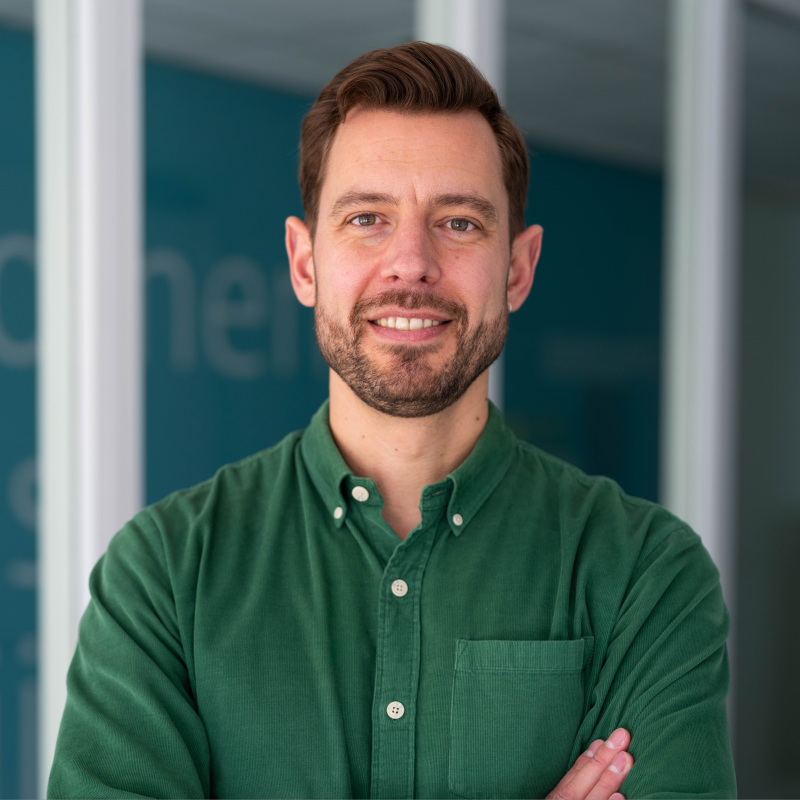
Externally, AI evolves in a matter of months, while internally, an organization changes over the course of years. At KWF Kankerbestrijding, a charity where some 200 colleagues work in self-organizing circles, AI cannot simply be “rolled out.” KWF therefore takes a two-pronged approach. The adoption track provides space to experiment safely and to make mistakes. The governance track provides direction by making conscious choices about what KWF will do with AI—and what it will leave out, despite the hype. Veerle Schoon and Steef van Velzen share what worked, what proved challenging, and what they would do differently now. Visitors will take away concrete lessons for their own organizations and go home with one question: What will you do with the time that AI frees up?


Fast, Confident, and Wrong: Fixing AI-Assisted Insights from the Ground Up
AI can generate answers faster than ever, but speed is useless if the output cannot be traced back to reliable data, clear definitions, and sound decision-making rules. MMR Research shows what organizations need to put in place before AI-assisted insights can truly be trusted, using FMCG product testing as a practical example.
Is AI helping us do our jobs better—or are we undermining our profession?
Based on new research on workplace happiness and AI, participants will discuss how AI affects quality, creativity, workload, flow, and engagement. Do professionals recognize these effects in their own work, and which skills are becoming more important as AI takes over more tasks?



Lunchpauze
Ronde 4

Session to follow
Session to follow
Perfect data rarely exists. Marian Temmen draws on his experience in sourcing, traceability and supply chain transformation at PVH and as a scale-up COO to show how organisations can make better decisions with imperfect data. The session explores why data ownership belongs with the business, how to build momentum before everything is “clean”, and what cultural shift is needed to make analytics and AI actually stick.
The Showroom No One Is Talking About: Reframing What AI Can Actually Do for Researchers
A broader discussion on how organizations and researchers need to think beyond “AI = LLM.” AI is evolving faster than existing business models; which AI should you use for which problem, and how can you truly become AI-native rather than just speeding up existing processes?
Ronde 5

From Research Client to Research Orchestrator
Research teams are gaining increasing direct control over target audiences, tools, and analytics. Norstat demonstrates how AI and self-service research are transforming this role and how organizations can move more quickly from question to insight and decision-making, without compromising reliability and representativeness.


Synthetic Data You Can Trust? Validating Digital Twins Against Reality

Can AI Create Better Out-of-Home Advertising? Lessons from Over 700 Campaign Cases
Based on a meta-analysis of over 700 client cases: How can you use AI to evaluate and optimize (D)OOH creatives to achieve stronger brand effects? A combination of panel data and predictive, suggestive, and generative AI.

From Data to Conviction: How Do You Make Insights Truly Understandable?
In this interactive roundtable, Bureau Gibbs shares how to present data and insights in a way that ensures they are not only understood but also lead to concrete action. Using examples from their training as a starting point, participants will discuss what makes a visual or graph effective, where things often go wrong, and how to convey complex information clearly and persuasively.


Koffiepauze
Ronde 6
Session to follow
MWM2 laat zien hoe AI kan helpen om verder te kijken dan wat mensen zeggen en beter te begrijpen wat hen werkelijk drijft. De sessie verkent hoe nieuwe AI-toepassingen kunnen worden ingezet om motivaties en gedrag scherper te duiden, en wat dat betekent voor onderzoek, inzichten en betere besluitvorming.

From a data foundation to a data-driven approach: How do you get the entire organization on board?
Facta demonstrates how a modern data foundation is built step by step to enable truly data-driven operations. The case study focuses on data management, standardization, business transformation, and how to incorporate the entire decision-making chain, from executive management down to the branch level.
Pricing Elasticity: What Happens When Prices Change? A Causal Perspective
How do customers really react when prices change? ADC demonstrates how causal inference can be used to estimate price elasticity and distinguish true price effects from simple correlation. The session explores what this means for pricing decisions related to growth, retention, and revenue—and where organizations can easily draw the wrong conclusions.